
I Spent Ten Years Saying I Wanted to Noseride
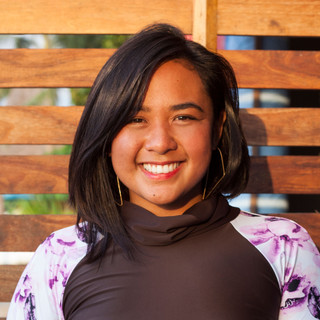
Hi! I'm Laura Day, I'm a longboarder in San Diego. It took me over a decade to understand that not being able to noseride was never a talent problem. It was an information problem, a mindset problem, and a support problem. Here's the whole story, and what I'd tell you to do differently.
Prefer to listen? I read this one on the podcast. Press play, or keep scrolling.

I didn't grow up surfing.
I started in my early twenties, right after I moved to San Diego. My cousin gave me a board as she left for Germany.
"You can just have it, it's been sitting in the side yard."
That was the extent of my inheritance. An eight-foot board, no idea what to do with it, and completely stoked.
But of course, no how-to guide. Anything I wanted to know, I had to go looking for.
It wasn't until 2012 that I started paddling out consistently. I'd tag along with a guy I was dating. Occasionally him and his friends would give me a tip or two on how to avoid getting stuck inside battling white wash, but it never really landed.
Eventually, I became frustrated surfing with guys who were way better than me and found a local women's surf group to go out with instead. That's when my surfing became my own.
The one noseriding video I could find in 2012
From the beginning, I was drawn to longboarding. I wanted to noseride.
Back then there was barely anything online about it. No algorithm feeding you picture-perfect waves with women perched on the nose. No video tutorials. No reels. Almost nothing.
What there was for me was one video. Kelia Moniz at Waikiki. A GoPro mounted on the nose of her red board, her cross stepping back and forth, the shot landing on her toes dangling over the edge. Undeniable joy on her face.
It wasn't just the trick. It was the grace, the control, the way she was in tune with the wave. It looked like the most fun a surfer could have. Completely in flow with the ocean, her board, and her body at the same time.
From the first time I watched that video, I knew I wanted to noseride. I still do.
That was 2012. It's 2026 now. In my years of surfing I've met so many women who dream about the exact same thing. Gracefully perching their toes on the nose.
A dream, and no idea how to get there.
So I bought the wrong board
I walked into a shop to buy a new surfboard. I told them I wanted to learn how to noseride.
They sold me an 8'6".
"It might be a little harder, but you could probably get to the nose on it."
It took me years to understand what was actually wrong. Length was part of it. Noseriders want to be nine feet and up, ideally 9'4" or 9'6". And often include features like a square tail or concaves that make it ideal for keeping the board in the pocket.
But the real thing is simpler than that. I asked for a board to noseride on, and they sold me a board that wasn't really a noserider.
I got what was on the rack that day, not the best fit for the goal I had just shared. But I was new enough to take their word for it. So I bought into it, hundreds of dollars later I bought the board.

Over a decade of guessing at the cross-step
So I did what you do when you want something badly but have no map. I guessed.
I looked to my friend Mike, who was a really good shortboarder, and asked him how he got so good at surfing.
"I'd put on surf videos and practice their movements in my living room," he said, as he crouched down into a bottom turn and then extended up into a hypothetical top turn.
So that's what I did. I scoured the internet for what little footage I could find of surfers cross-stepping. I'd stand next to my laptop, YouTube on full screen, and walk back and forth on my bedroom floor, dreaming about what it might actually feel like.
Then it was time to try it in the water. I made myself a promise. No shuffling. So I'd paddle out, try to walk, fall off, try again. Eventually I'd get a stable step or two in.
Today I look back at photos of myself from that time and I can see I was closer than I thought. In some of them I'm actually set up really well on the wave, in a decent spot on the board.
But I had no idea. I didn't know why the steps happened sometimes and not others. I didn't know what they were supposed to accomplish, or how they connected to the noseride at all. I didn't know where I was on the wave or why it mattered.
I was going on guessing and feel. Not understanding.

And I was grateful for any tip I could get. When I told my surf guide in the Phillippines that I couldn't cross-step backwards, he smiled and said, "you'll figure it out."
His faith in me did push me to try, and eventually I figured it out.
When I told a friend in Hawaii I wanted to noseride, he said, "that's easy. Just walk the inside."
The tips were kindly meant. Mike in his living room, the guide in the Philippines, my friend in Hawaii. But piecemealing them together never added up to understanding what was actually happening.
Kind encouragement without context. So I kept guessing.
The $250 lesson that taught me nothing
In 2021, I decided it was time to get serious about this goal.
So a friend and I hired an instructor. It was $250 for the hour, which for me was real money. We told her exactly what we had our eyes on. We wanted to learn how to cross-step. We wanted to learn how to noseride.
We planned to meet at one of the best point breaks in California for this exact skill. She showed up late.
When we asked about cross-step technique, and when we were supposed to take a step, she said, "if you feel like cross-stepping, take a step."
That's it. No explanation, no breakdown on land, nothing about whether the conditions that day were suited for cross-stepping or what we should work on if they weren't. No context at all.
To top it off, she spent most of the hour talking to people she knew in the lineup. I'm not even sure she watched us catch a single wave.
I paddled in $250 lighter and more discouraged than when I paddled out. Like cross-stepping and noseriding were some kind of secret nobody wanted to share, even when you paid for the guidance.

The goal goes quiet
Here's the part nobody talks about, because it doesn't look like a story.
There was no moment. I didn't rage-quit. I didn't cry in the parking lot. What happened is much more ordinary than that: I slowly got okay with not progressing on something I really wanted.
You tell yourself you're grateful just to be in the water — and you are, that part is true. You tell yourself maybe it'll happen one day. You stop saying the goal out loud quite so often. Underneath it, a quieter belief settles in: other people are just more talented than me. This is probably where my limit is.
And then one day you do the math and realize you've been saying you want to noseride for over a decade, and you still can't, and there's a specific kind of embarrassment in that. Not shame, exactly. More like the feeling of finding something you started a long time ago and never finished.
Meanwhile Instagram got very good at showing me women surfing beautifully at perfect waves. At first that was inspiring. Then it wasn't. Because you never see the attempts. The missed waves, the falls, the hundreds of reps it took to get the one clip you're watching. You see the outcome, adorable bikini, on a perfect wave, dry hair, and with no context, the gap between that and your own surfing stops feeling like a learning curve and starts feeling like a verdict.
That's when the excuses pile up. If only I had a better board. If only I had better waves. If only I could surf as often as she does. Maybe I need to be fitter, stronger, younger, more athletic.
And underneath all of them, the one nobody says out loud. Maybe I just don't have the raw talent.
I've said most of the others out loud. That last one I only ever said to myself.

It was never a talent gap
It turns out it was never a talent gap.
It was an information gap. It was a mindset gap. It was a support gap.
Every session was a guess. And guessing for over a decade produces exactly what you'd expect. A surfer who can take a couple of cross steps with no idea how or why, and no idea how to get to the nose.
Here's what I know now that I didn't then. An information gap is fixable. A mindset gap is fixable. A support gap is fixable. A story about not being born with raw talent is not.
But without the resources, turning down the volume on that noseride dream seemed like the most reasonable thing to do.
The conversation that changed it
The noseride dream was on the back burner, but I was still endlessly curious about surfing.
Whenever I met someone who loved talking about it, I picked their brain. I'd ask as many questions as they'd let me. And I noticed that when you show that kind of interest, the right people step into a mentor role without anyone naming it.
One of those conversations changed how I understood surf progression entirely. It was about my pop-up.
"Every time I pop up, my feet are in a random place. I want to turn the board but by the time I get my feet in the right position, I've missed half the wave."
The mentor told me to stay in a push-up position first, glide into the wave, and then place my back foot where I wanted it.
The next wave, I made the adjustment, had much more control, and my surfing changed completely.
Mike, the guide in the Philippines, my friend in Hawaii. This isn't a knock on any of them or the advice they offered. It's a reflection on me. I'd asked all of them how do you do that, how do you get better, I want to noseride.
No depth in the question, no depth in the answer.
What changed was that I learned how to articulate my own surfing. To take where I was, put it into words with enough nuance that someone could actually understand the question, and get back something I could actually implement.
What I built: the Noseride Blueprint
In November 2021 I launched The Surf Société. I had a podcast and I wanted to build a community around it, so I asked a bunch of women what they actually wanted from it.
They said they wanted to get better at surfing.
So that's what we built. And what surprised me was how much everyone got out of it in their own way. Not the same breakthrough, not on the same timeline. What they had in common was that their surf goals started to feel possible.
This cued the resurrection of the noseride dream. If a refined pop-up felt possible, then noseriding had to feel possible too.
In 2023 I started conceptualizing the Noseride Blueprint, but I didn't know enough to build it yet.
What I spent the next two years on was the questions. Learning enough about surfing to know what to ask, and who to ask, and how to ask it with enough specificity to get something real back.
In 2025 we ran the first Noseride Blueprint challenge.
The whole point was to demystify it. To lay the whole thing out as a map, so any woman could look at it and see where she actually is, what's next, and what she needs to demand of herself to get there. Not raw talent. A pathway, a map, a possibility.
Six workshops. Q&As with mentors. Practical assignments. A little friendly competition and some prizes.

Here's a few things the first group of ladies had to say after the challenge:
"I realized I hadn't actually been trying, because I didn't want to fall in front of the whole lineup."
"I have tools now that are going to help me keep practicing."
"I'd already made more progress in two and a half weeks than I had in two years."
Just a little feedback from the ladies who joined us in the first run.
Where I am now
I will always be inspired by here but I'm not trying to be Kelia anymore.
Somewhere in there I reframed it. The noseride journey is my journey, and it's going to look the way it looks for me. My style will develop the way my style develops.
Here's what surprised me most. Those Instagram reels that had become so discouraging turned back into information. Now that I know how to analyze what I'm watching, I can dissect a clip and actually see what she's doing and why it works. The knowledge gap closed, and the same footage that used to feel like a verdict became inspiring again.
I can occasionally get to the nose. But more importantly, it's demystified. I understand where I'm at in the process. I know which levers I can pull to move forward. When something doesn't work, I can troubleshoot instead of guessing and hoping, and I have a support system to fall back on when I'm not sure.
I'm no longer a person who's been saying she wants to noseride for over a decade. I'm a surfer in the process.

Come learn to noseride with me
The Noseride Blueprint is built out of every question I spent ten years not knowing how to ask.
It's twelve weeks inside The Surf Société, and it's the three things I didn't have. The information, laid out as a map so you can see where you actually are and what comes next.
The mindset, because knowing the steps does nothing until you're willing to fall in front of people. And the support, which is a group of women working on the same goal at the same time, asking the questions you thought were too basic to ask out loud.
Six workshops: mindset, equipment, wave and section selection, cross step technique, hang five, and hang ten plus advanced maneuvers. Practical assignments in the water. Q&As with mentors who each break it down a little differently.
You don't have to guess for a decade. That part is optional.
Start free: download the our Free 10 tip Noseride Guide
Hear how it works: come to the open house on August 5 and ask me anything. RSVP here.
Already know it's for you: Join the Noseride Blueprint Challenge
Questions I get about learning to noseride
Before I answer any of these: everything below is my own experience plus what I've picked up from mentors along the way, and I'm still working on all of it. Surf advice is always one perspective, including mine. So take it, understand *why* it works, go experiment with it, and talk to other people about it. That part is the actual skill. It's the thing that took me ten years to learn how to do.
What length board do you need to noseride?
Most people will tell you to look for something over nine feet — 9'0", 9'2", 9'4", 9'6" — and that's a reasonable place to start. But length is the smaller half of the answer.
The board I was sold was an 8'6". It wasn't a bad board. It just wasn't a noserider.
A noserider is a specific design, and once you know that, you get to start making real choices instead of just asking how long it is. Tail shape is one of them. A square tail is a popular noserider tail because that corner gives you something to pivot into the wave, that's what the corner is there for. Bottom contours are another. Concaves can increase the surface area in the nose and give you more support for noseriding.
So the question to ask in the shop isn't "is this long enough." It's "is this a noserider, and what about it makes it one?"
Do I have to cross step, or can I shuffle to the nose?
You can get to the nose any way you want to get to the nose. There are no rules about what you can or can't do, or should or shouldn't do.
Cross stepping is an efficient way to transfer your weight up there, and yes, it carries a certain sense of style. For me personally, I told myself I wouldn't shuffle, specifically so I'd force myself to learn to cross step. Because when you're surfing, you'll intuitively want to move your weight forward, and the intuition is to shuffle. I didn't want that habit.
But keep in mind we're moving our feet along the board all the time anyway. You will shuffle sometimes, just to get where you need to go.
The real question is whether shuffling is the style you want to use to get to the nose. If it is, it won't be the most efficient way up there. But it isn't wrong.
How long does it take to learn to noseride?
It took me over a decade just to understand what it *took* — and to start actually getting myself up there.
Honestly, it depends. Do you surf waves that suit noseriding? How often do you get in the water? Do you have the right equipment? Do you have support?
I don't know how long it'll take you. I don't even know how long it'll take me to noseride proficiently, because that goal keeps moving. What I can tell you is that you can cut the time down drastically by having the information, the mindset, and the support, which is exactly what we built inside The Surf Société and the Noseride Blueprint.
Do I need a surf coach to learn to noseride?
What you need is guidance, direction, and someone to have the conversation with. That can absolutely be a surf coach, there's nothing wrong with surf coaches.
But I think the best way to use one is when you already know how to articulate what you need out of your surfing. Otherwise you show up and hope they'll hand you direction, which was my mistake. I thought that's what I was buying. What I learned is that you are the director of your own progress, even when you're paying somebody.
That's part of what something like the Noseride Blueprint gives you: you learn to direct the conversation, instead of showing up and being told "if you feel like cross stepping, take a step." And if you want to get the most out of your $250, you'll have the language to know whether that person can help you *before* you hire them.
Why does my nose sink every time I get to the front of the board?
Same caveat, it could be a number of things. But for me, it's almost always that my board isn't actually set in the pocket.
Here's what happens. I see a wall, I start cross stepping, and cross stepping forward puts gas on the board. So the board accelerates, away from the pocket and out onto the shoulder. And once you're on the shoulder, the pocket can't hold your tail down anymore. This is how noseriding is possible at all. The curl of the wave holds your tail down while you counter-balance on the nose. Nothing holding the tail down means nothing holding the nose up. You sink.
So a lot of it is your boards positioning on the wave. Sometimes the wave just wasn't powerful enough or it wasn't the right shape. But mostly it comes back to your setup: if it was a wave you *could* have gotten to the nose on, then you likely didn't set the board up so the pocket keeps holding you. You likely didn't get the board deep enough. Remember, that pocket is the lever that lets you stand on the nose at all. Outrun it, and you don't have the lever anymore.
If you want to go deeper on noseriding download our FREE Surf Lady's Guide to Noseriding which includes 10 tips from our mentors.


Comments